

Summer in New Zealand is good for cars — longer days, road trips, weekends away, and a daily driver that feels a lot more appealing when you are not getting into it in the rain. It is not quite as kind to the surfaces of the car itself. Sun, heat, UV, bugs, bird droppings, and everything else that lands on a hot vehicle all take their toll, so before summer really gets going, here is what is worth thinking about.
NZ Sun Is Tough on More Than Just You
Most of us remember sunscreen for ourselves. The car does not get the same treatment. UV exposure contributes to the gradual deterioration and fading of automotive surfaces over time — and not only the paint. Exterior clear coat, plastic trim, rubber, headlights, interior plastics, leather, and dash surfaces are all regularly exposed. One afternoon parked outside will not do lasting damage on its own. It is the repeated exposure over months and years that adds up, which is why protection is really about reducing what accumulates over time rather than preventing any single event.
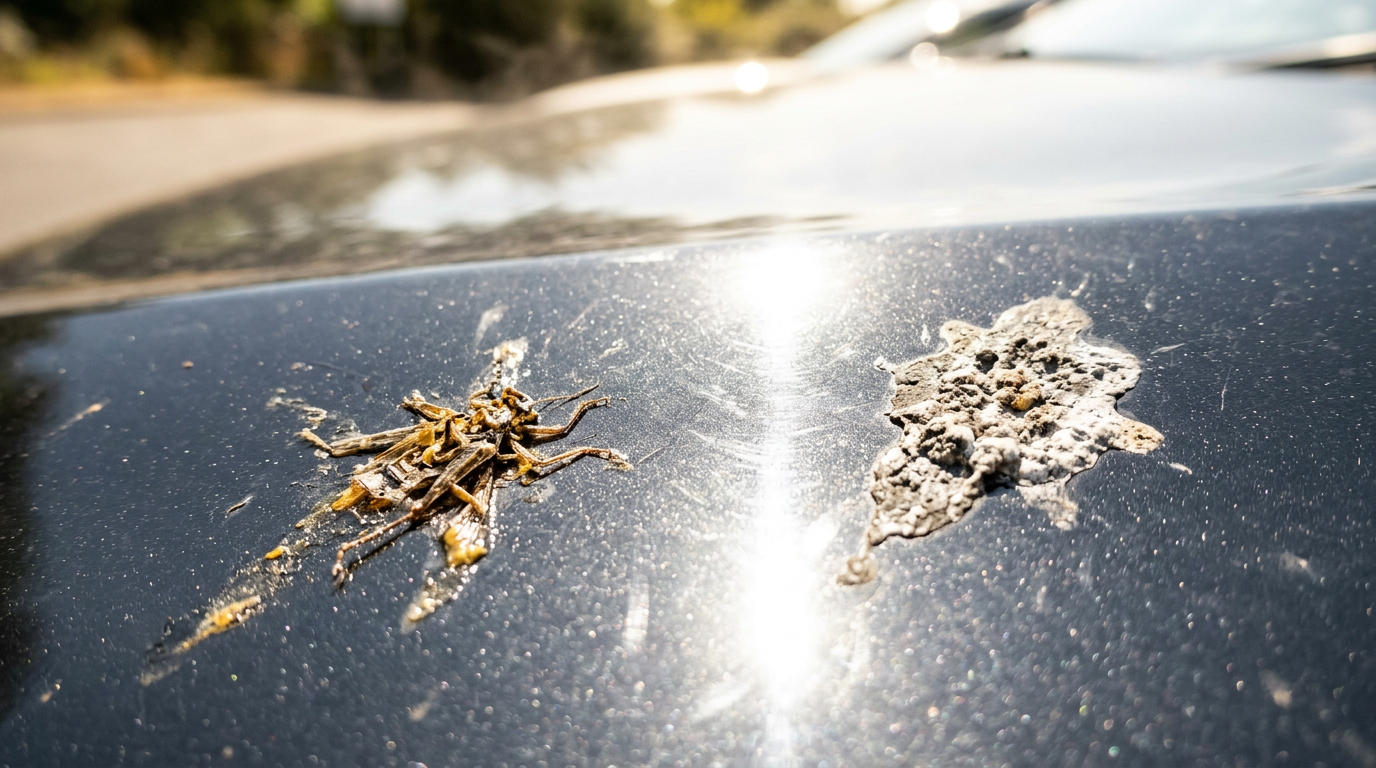
Heat Makes Contaminants a Bigger Problem.
It is not only what lands on the car — it is what happens once it sits there on a hot surface. Bird droppings, bug splatter, tree sap, water spots, and road grime all become harder to remove the longer they sit on hot paint, and some can etch into the surface if left long enough. Dealing with contaminants sooner rather than later is a simple habit that avoids a lot of avoidable damage. See a bird dropping — remove it safely. Come home from a road trip with the front of the car covered in insects — do not leave them there for the next few weeks.
Summer Road Trips Mean Bugs and Stone Chips
Anyone who has driven any distance around New Zealand in summer knows the drill — bonnet, bumper, mirrors, headlights, and an impressive number of insects on the windscreen by the end of the trip. The front of the vehicle takes the brunt of it, which is exactly why that end of the car is usually the first place worth protecting if long summer drives are part of how you use the vehicle.
How PPF and Ceramic Coating Each Help in Summer
The two work differently, and summer tends to make that obvious. PPF's physical layer is what stands between the road and the paint on a long summer road trip — taking the stone chips, road debris, and bug impacts that come with covering serious distance. Ceramic coating, applied over the film or directly onto the paint, is what makes the rest of summer's mess — bird droppings, bug splatter, road grime — easier to shift before it has a chance to bake in. Applied together, one absorbs the impact and the other keeps the surface easy to keep clean.
Your Washing Habits Still Matter
Protection does not mean maintenance disappears — it means you are looking after protected surfaces rather than expecting the protection to do everything on its own. Use suitable car-care products, avoid scrubbing aggressively at contaminants, and remove bird droppings and bug splatter sooner rather than later. If your car has PPF, keep a pressure-washer nozzle away from the film edges — high-pressure water directed straight at an edge can cause it to lift. None of this is difficult; it is just sensible habits that help you get the best from the protection you have invested in.
Don't Forget What's Happening Inside
Summer is not only happening outside the car. Open a vehicle that has been sitting in full sun and it is obvious what has been happening inside too — heat, glare, and sunlight pouring through the glass while interior surfaces sit exposed to UV for hours at a time. Quality automotive window film helps with heat rejection, glare, and UV protection, while also helping protect interior surfaces from long-term exposure — and it can make the vehicle look considerably better in the process.
Parking in the Shade Has a Catch
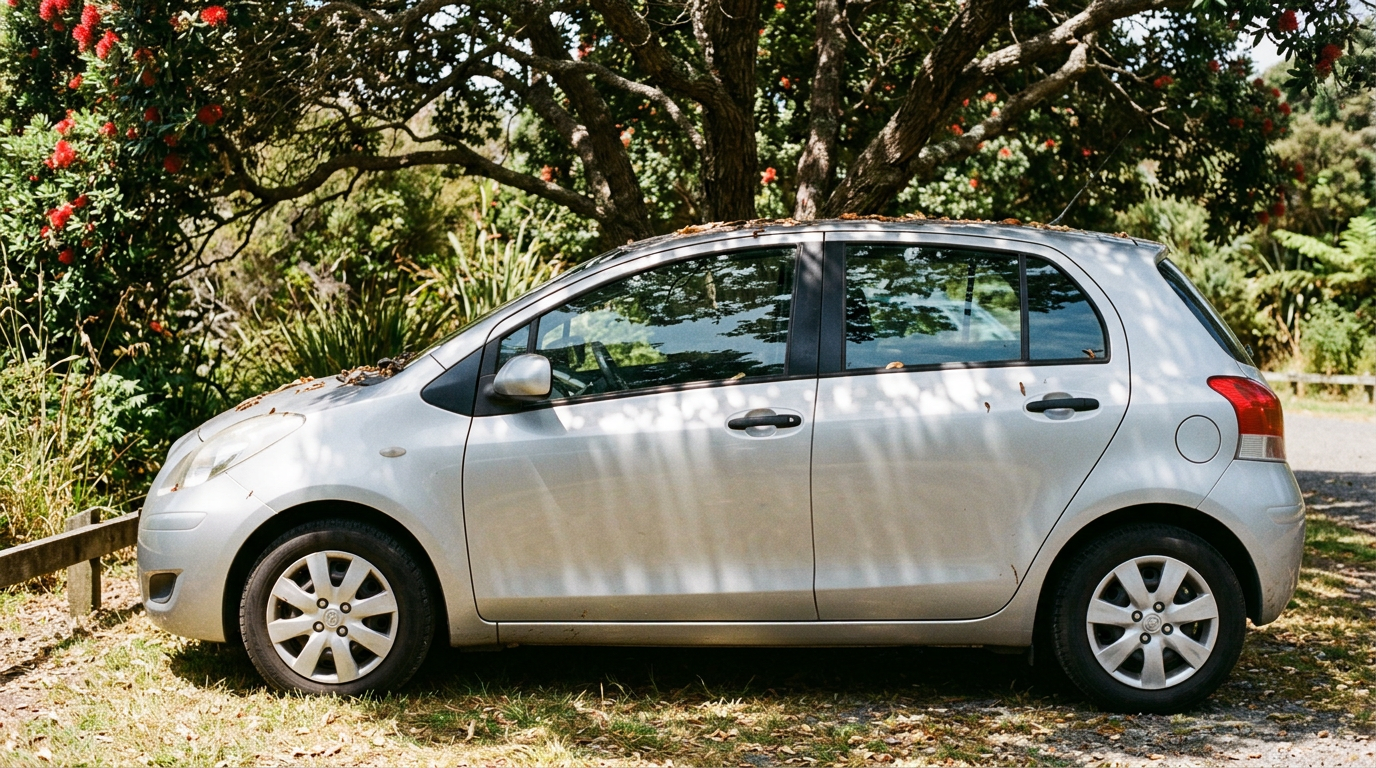
Shade sounds like the obvious answer on a hot day, and it does help — until you come back to find the car covered in tree sap, bird droppings, pollen, and leaves. That is not a reason to avoid trees altogether, just a reminder to check what has landed on the vehicle and clean it off properly rather than letting it sit.
The Bottom Line
New Zealand summer is brilliant for actually using and enjoying a vehicle, and it is also a good reminder that paint, glass, and interior surfaces are constantly exposed to the environment around them. Do not let contaminants sit on hot surfaces, wash the car using suitable products and techniques, consider PPF where physical damage is the biggest concern, look at ceramic coating where easier maintenance matters, and think about quality window film for heat, glare, and UV. Then stop worrying about it and go enjoy summer — that is what the car is for.
carpaintprotection.co.nz — Paint Protection Film, Ceramic Coating & Window Tint — Auckland, NZ